
The calendar is full. Posts go out. Cutdowns go out. A carousel, a story, a static, a tweet that is also a LinkedIn post if you squint. The team is not lazy. The machine is on.
At the end of the quarter the graphs spike and fall, and nothing you made last month is still doing work this month. Output was constant. None of it compounded.
Volume is a coping mechanism
Always-on is easy to sell because it looks like effort. A feed that never goes quiet reassures the room. It also hides the absence of a system. If every piece has to be invented from zero, you do not have a content engine. You have a treadmill.
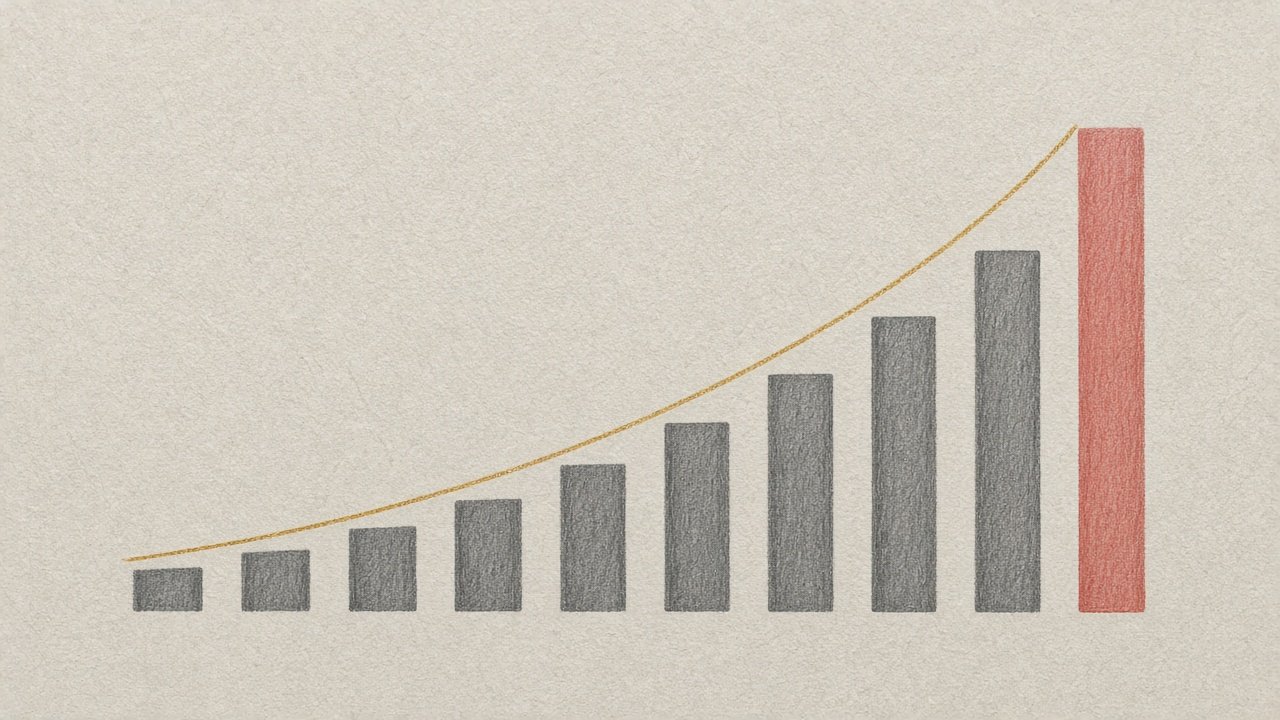
Compounding looks quieter. One idea that can be recut, re-argued, and returned to. A format the audience starts to recognise. A line that still works when the media buyer changes the placement. Measurement that tells you which thought is carrying the result — not which thumbnail won a two-day test and then vanished.
Performance creative is still creative
The split between “brand work” and “performance work” is how a lot of money gets wasted. Brand that cannot live in a unit nobody clicks is a poster. Performance that cannot be recognised as you is rented attention. The useful version is one idea, built so it can travel: into a six-second cut, a still, a landing line, a follow-up that does not feel like a different company woke up.
That only happens if the platform existed before the media plan. Growth cannot invent the thing worth repeating. It can only scale it, or scale the void.
Compounding, not spiking
A spike is a good week. Compounding is a stack: each piece makes the next one cheaper to understand. You feel it when a new execution does not need a paragraph of context. The audience already knows the thought. You are adding a verse, not restarting the song.
If you publish constantly and none of it adds up, bring us the calendar. We will look for the idea that can carry, then build the system — performance creative, social, always-on — around that, instead of around the fear of a quiet week.